
What is Radon?
Radon and its risks
Radon is a radioactive gas that forms when the Uranium in natural stone decays. The gas decays into radon progeny which are radioactive metal atoms that get caught in our respiratory tracts during inhalation. Radiation emitted from the radon progeny causes lung cancer by damaging the cells in our respiratory tracts and lungs. Radon causes an estimated 3,000 deaths a year in Canada and is present in every home.
Both Health Canada and other public health authorities provide guidance to help assess radon risk. In Canada, Health Canada recommends taking action to reduce radon levels at or above 200 Bq/m³. Testing is the only way to determine the radon level in your home.
Measurement of Radon in Indoor Air
Radon gas is both odorless and invisible, meaning a test is the only way to detect the gas. The amount of radon in indoor air will vary depending on structural deficiencies, ventilation, and is influenced by the weather outside. Due to these factors, it is recommended that all dwellings, schools, and workplaces be tested for radon gas.
- Immediately if a radon test has never been performed before and every two years as environmental conditions change
- After any renovation, as small cracks can arise in the foundation and renovations to a home can change air flow and ventilation
- Every year, if you have previously taken action to reduce a high radon level
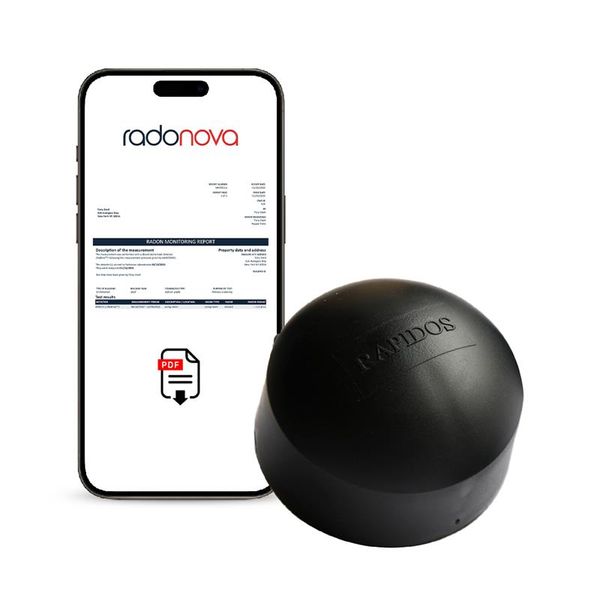
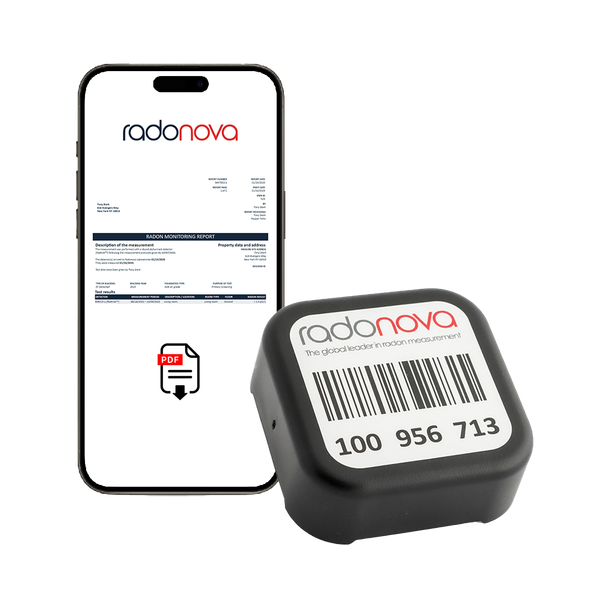
Using our Radtrak³®, a measurement should be for a duration of at least three months, ideally a full year, as the guidelines are based on year long exposures and the longer the period the more accurate the measurement. In some cases, measurements are conducted over a shorter measuring period in order to obtain an approximate value. Short-term measurements with our specially designed detector Rapidos®, require a period of at least 10 days. These tests can be used as preliminary tests for residences to get a quick evaluation and determine if remediation is needed immediately or in projects when a smaller sampling window is required.
Canada
Health Canada set a radon guideline of 200 Bq/m3 (becquerels per meter cubed) for indoor measurements. This average is calculated by taking your homes total radon concentration and dividing it by the amount of days the radon detector was monitoring.
On below entities you can find more official information on the guidelines for a specific region:
| International | WHO |
| Europe | ERA |
| USA | AARST-NRPP |
| Canada | CARST-C-NRPP |
| Sweden | SSM |
| Austria | BMLFUW |
| Switzerland | BAG |
| Germany | Bundesamt für Strahlenschutz |
| Ireland | RPII EPA |
| Great Britain | PHE |
| Denmark | Sundhedsstyrelsen |
| Finland | STUK |
| France | Radon France |
Most Popular Radon Test Kits