
Understanding Radon Levels
Learn more about our home radon test kits here.
What is a Radon Level?
Radon is an invisible, radioactive gas that mixes with the air to affect the overall indoor air quality. Because long-term exposure to radon can have potentially harmful side-effects, radon test kits are used to determine the concentration levels of radon in indoor, breathable air. The air we breathe is mostly nitrogen and oxygen, but these tests are sensitive enough to detect the radon gas.
Exposure to the air for a specific amount of time allows the test to capture just enough particles to get an accurate reading of the overall gas levels. Circulating air too rapidly around or over the test will cause false readings. Manufacturers recommend keeping the tests away from doors and windows. The air coming in through a window could dilute the radon gas level to create a false low reading or influence it in the other direction. For an accurate reading of the gases in your home's air supply, proper placement is essential.
Important Information on Radon
Health Canada recommends taking action to reduce radon levels at or above 200 Bq/m³. Elevated radon levels increase a person's risk of developing lung cancer, and there is no known safe level of radon exposure. The WHO, World Health Organization, recommends a reference level of 100 Bq/m³ where possible. Because of this health risk, it is best to reduce radon levels as much as reasonably possible. Lower levels can be achieved through radon mitigation systems, either active or passive, that work to remove radon from the home.
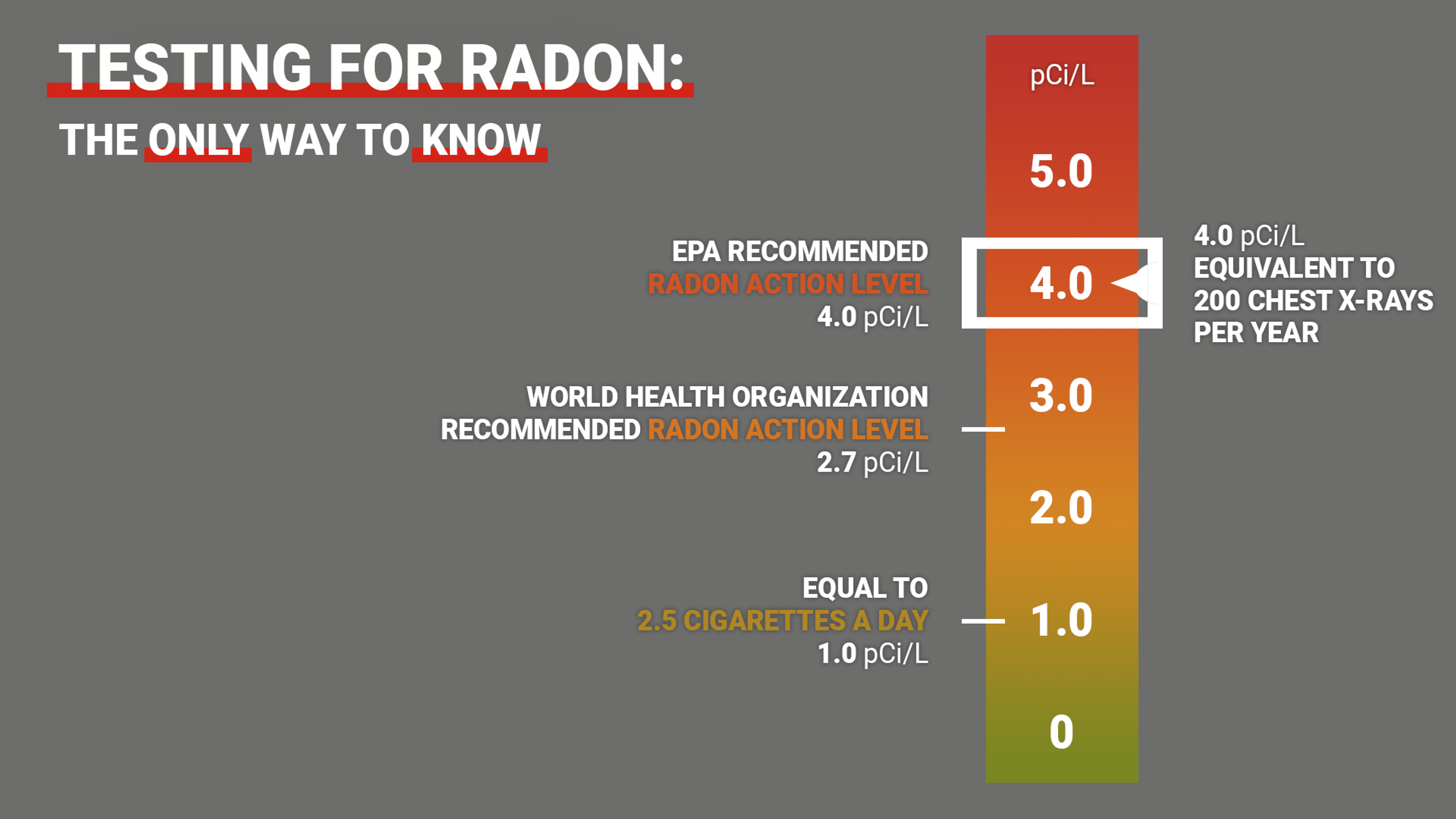
Radon level thresholds are designed to help homeowners interpret their radon readings in terms of long-term health risks. The World Health Organization recommends a reference level of 100 Bq/m³ where possible. For Canadians, Health Canada recommends taking action to reduce radon levels when radon is 200 Bq/m³ or higher.
Although 200 Bq/m³ is the Health Canada guideline level, it is not a true safety threshold – any exposure to radon gas carries risk, and reducing radon exposure as much as reasonably possible is recommended. The dangers of radon exposure increase with long-term exposure, so even lower levels should not be ignored.
Whether you're using home radon test kits for your family residence or commercial radon detectors in a business environment, knowing how to interpret a radon test result is essential for taking informed action. No threshold is completely free of risk, and every reduction in radon exposure contributes to lower health risks.
There is technically no safe radon level for constant exposure. Radon can increase the risk of lung cancer even at lower levels. It is best to aim for as low a radon level in the home as reasonably possible. For this reason, Health Canada and the WHO, World Health Organization, have established recommendations based on long-term radon exposure. Health Canada recommends taking action to reduce radon levels when measurements are 200 Bq/m³ or above. However, this doesn't mean that a home with radon levels below 200 Bq/m³ is automatically risk-free. The WHO specifically states that there is no known threshold below which radon exposure carries no risk. Regular testing is the best way to understand radon levels in your home and how they may change over time.
Much like carbon monoxide, radon gas poses a hazard without any signs like odor or colour. Only regular testing will keep you informed on your home’s air quality and the risks facing your family. Radon gas is surprisingly common and daily exposure to high levels can result in a higher risk for lung cancer according to Health Canada.
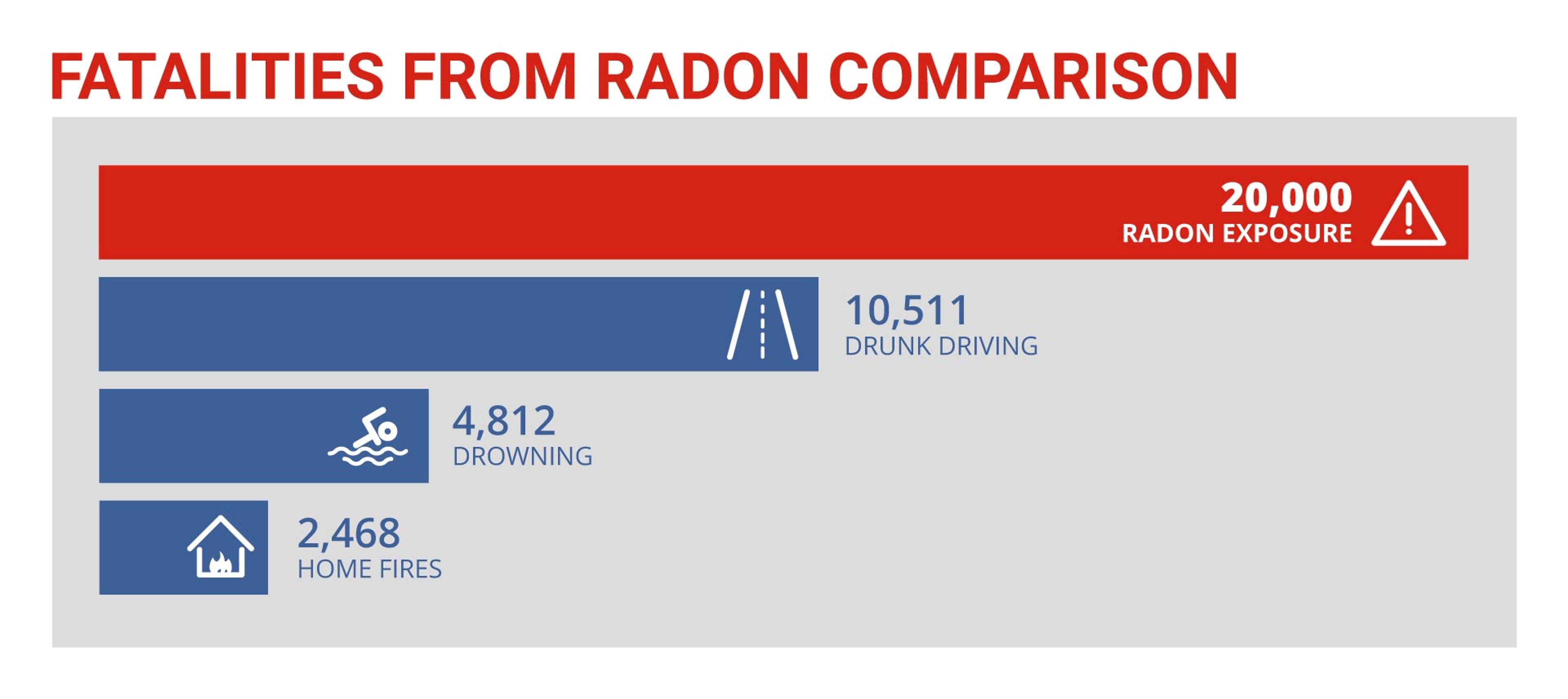
Radon is an invisible, odorless gas that naturally results from the radioactive decay of uranium in rocks, soil and sometimes water. As the gas rises, it can easily become trapped inside a structure like a home or an office building. Routine testing is the only way to know if you are at risk for radon exposure at home. Health Canada identifies radon as the second leading cause of lung cancer after smoking. If you smoke cigarettes and live in a home with high radon levels, you face a combined threat that may further increase your risk of cancer.
Radon is particularly dangerous because it comes from a natural source and can vary in levels over the course of a year as the seasons and weather conditions change. Your home might test at one radon level one month and then return a much higher reading during a different part of the year. Performing both short-term and long-term radon tests can help provide a fuller picture of your exposure levels. Health Canada recommends taking action to reduce radon levels at or above 200 Bq/m³. Regular testing and appropriate mitigation can help reduce radon exposure in a home.
Many variables influence indoor radon levels, often causing fluctuations from season to season or even day to day. Soil composition beneath your home plays a key role – areas with uranium-rich or porous soil tend to release more radon. Moisture content and temperature differences between indoor and outdoor air also contribute to how easily radon seeps into living spaces.
Structural issues such as unsealed cracks in foundations, gaps around utility lines, and unventilated crawl spaces serve as common radon entry points. Human activities like a home remodeling project, installing a new HVAC system, or rearranging airflow patterns can all shift how radon accumulates. For this reason, seasonal changes in radon levels are very real, making it essential to stay up-to-date with the latest radon information and test consistently.
Because radon gas exposure over time is cumulative, relying on a single test may lead to a false sense of security. Using a home radon testing kit every couple of years, or after major property changes, is essential for managing long-term risk. Understanding how to measure radon levels under various conditions equips homeowners and facility managers with the knowledge needed for consistent monitoring and decision-making.
Health Canada estimates that approximately 1 in 5 Canadian homes have radon levels at or above 200 Bq/m³. Depending on the province or territory’s laws, you may be required to complete a radon test during a real estate transaction.
There is no question about it, everyone wants the safest possible air in their own home and workplace. One accurate method to be sure your levels are low and staying low over a long period of time is to follow up with a long term test to check radon levels for fluctuations.
Once you’ve taken steps to lower radon, staying proactive with monitoring is just as important. Experts recommend retesting every one to two years or any time major structural or mechanical changes are made to your home. Even after installing a radon mitigation system, testing should continue to confirm that radon reduction efforts remain effective.
Pairing different testing methods helps deliver a more complete view. A short-term test offers fast insights, while a long-term test captures radon behavior across different seasons. For homeowners who want a more hands-off approach, a continuous radon monitor provides real-time data and alerts if levels begin to climb again. These devices are especially useful in areas with known radon issues or for those managing rental or high-traffic properties.
If you live in an older home or a region with elevated geological risk, it’s wise to retest more frequently. Keeping your air quality in check through periodic radon testing is a key part of maintaining a healthy indoor environment. No matter if you're using basic detectors or more advanced monitoring devices, staying informed about radon levels allows you to act before the risk becomes more serious.
You likely don’t need a professional or a mitigation team just to test your home for radon. This is a simple process any homeowner can handle on their own. Radon levels are easily measured with at-home tests you set up in certain areas and send away for lab analysis. The tests fall into two main categories of short-term and long-term products.
Short-term screenings or short-term tests are usually all that’s required for real estate transactions and construction permit requirements. For ongoing occupancy of the home, try a sequential combination of both short-term and long-term tests. Set up short-term screenings or tests a few weeks apart while running a long-term test in the background for a few months. This way, you’ll get a complete survey of the home’s radon levels over the various seasons.
Make sure you choose an accurate home radon test. Look for C-NRPP approval and the use of materials like charcoal and alpha track measurement devices. Choose tests with clear instructions on where to place the kit and how to prevent false readings from drafts or open windows. The test kits should include everything you need to complete the test and generate accurate results. Radonova radon tests meet all of these requirements and more.
Recommended Products for Homeowners
Explore More General Resources on Radon
Frequently Asked Questions on Radon
Understanding Why Radon is a Concern
The Importance of Radon Testing for Real Estate Transactions
What is radon laboratory accreditation, and why is it important?
What are the health risks of radon?
What causes radon in basements?
What do radon and cockroaches have in common?
Radon-Induced Lung Cancer Estimations in the U.S. and Canada
Radon Myths Debunked: What You Should Know